The information, products and services described on this website are intended solely for persons in Australia who are wholesale clients within the meaning of section 761G of the Corporations Act 2001 (Cth)). They are not directed at, and should not be relied upon by, retail clients.
By clicking Confirm below, you confirm that:
You are a wholesale client for the purposes of section 761G of the Corporations Act 2001 (Cth); and
Are high grade bonds a natural choice for strengthening your fixed income allocation
KEY TAKEAWAYS
Attractive global yields can complement domestic bond exposures: The rate normalisation seen in 2021 and 2022 means that yields around the world are material and compounding, making global bond yields more attractive to investors compared to the previously lower yields in earlier years.
Opportunities to strengthen portfolio defense in a world of material uncertainty: With higher yields on offer relative to the zero (or even negative) policy rates on show pre-2021, global high grade bonds can offer greater protection and cushioning against risky assets.
Active management plays a critical role in navigating financial markets: By actively monitoring central bank policies, market events, and local economic factors, fund managers can make timely decisions to protect or enhance portfolio performance.
Why global sovereign bonds matter now: Falling interest rates signal a shifting investment landscape, presenting new opportunities for asset allocators. With this easing of monetary policy, an allocation to global sovereign bonds within in a portfolio could act as a positive force to potential returns, whilst offering a source of capital preservation, stable income, and a reliable anchor in any investment portfolio.
In a rapidly evolving macroeconomic landscape, Australian investors are increasingly turning to global high grade government bonds as a highly defensive component of their investment portfolios. This move is predominately driven by global government bond markets offering greater portfolio diversity, enhanced return potential and broad sources of yield.
In this article, we unpack the key themes influencing investors’ long-term views on the value of including global high-grade bonds into a fixed income portfolio.
Where are we now in the cycle?
The key question facing investors today is: Where are we in the current business cycle, and when will the next shift occur? A glance at the economic growth of the world’s major economies and stock markets over the past decade reveals that we've been in an extended expansionary phase. However, determining exactly when the cycle will peak is notoriously difficult. While certain indicators have pointed to an approaching recession, accurately predicting this shift remains a challenge.
At a time where geopolitical tensions are intensifying and policy makers are grappling with softening global growth and persistent inflation, investors face a landscape of heightened uncertainty on many fronts.
Global central banks are embarking on a synchronized interest rate cutting cycle as the narrative has switched this year from inflation concerns to growth concerns. Global inflation has moderated from its peak levels, with current annual rates of inflation at 2.50% in the US (the lowest since February 2021), 2.00% in Canada, 2.20% in the UK, 2.20% in EU and 3.8% in Australia, although forecasted to fall to 2.70%. Meanwhile economic growth has started to show some cracks, which until now has been supported by government spending.
Employment remains a key determinant in the direction of growth and recent signs from the US indicate that this is turning. US employment data was recently sharply revised lower – which has triggered anxiety amongst central bankers. In response, they are eager to get on the front foot and curb labour market weakness before it deteriorates sharply. Savings are already getting depleted, and signs of rising delinquency are cautionary tales that will be exacerbated from job losses.
Asset allocations can be dynamically adjusted to optimise performance during different phases of the cycle. With the recent loss of US employment momentum, are we moving from Slowdown to Recession? If so, improving asset quality and liquidity will be important to navigate the coming market environment.
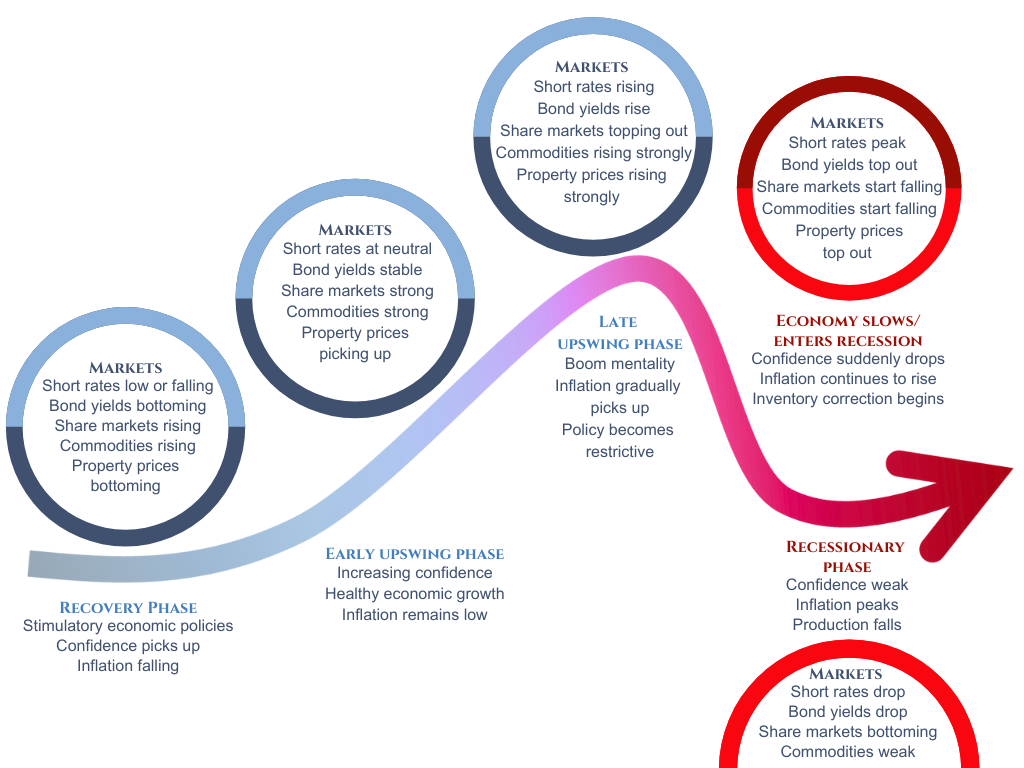
Chart 1: Phases in the business cycle.
The economic cycle consists of four key phases: Boom, Slowdown, Recession and Recovery, which then leads back to another Boom – continuing the cycle.
Expanding horizons: Unlocking enhanced alpha opportunities that may await
Not all bonds are created equal. High quality sovereign global bonds offer a lower risk profile due to their stability and creditworthiness. These bonds are typically issued by governments with strong financial standing, making them less susceptible to default and economic fluctuations compared to lower-rated or corporate bonds. As a result, they can serve as a safer option for investors seeking to mitigate risk within their portfolios.
Global high grade bonds currently present unique alpha opportunities for investors.
Capitalising on the global interest rate cycle: With many G7 nations beginning to cut rates, increasing exposure to high grade government bonds can be advantageous. By extending the duration of high quality bonds during a period of falling interest rates, fixed income investors can achieve greater stability and lower credit risk. This strategy becomes far more attractive compared to newly issued bonds that offer lower yields in a low-interest rate environment.
Highly liquid in all market conditions: The global bond market can play a pivotal role in an investor’s portfolio due to its liquidity offering, with its ability to enter and exit positions to manage risk and changing market conditions. This flexibility allows fixed income investors to access their funds when needed, with a highly liquid bond market serving as a hedge against riskier assets during market volatility. Additionally, liquidity can present potential alpha opportunities, as investors can capitalise on market inefficiencies to enhance their returns.
Lowering risk and volatility: Investing in a global bond portfolio reduces country-specific risk by spreading investments across multiple regions, mitigating the impact of economic or political challenges in any single area. It also provides access to different interest rate environments. Additionally, bonds from various regions often have lower correlation with domestic bonds or equities, helping to reduce overall portfolio volatility and improve stability.
Optimising exposure through active management: By actively adjusting the duration of a bond portfolio, fund managers can respond to anticipated interest rate changes to maximise returns or minimise risk. They can also identify mispriced or undervalued bonds for enhanced yield opportunities and tactically allocate across different regions to capitalise on favourable economic conditions. Active managers employ risk management techniques to reduce downside risk and ensure liquidity by adjusting holdings based on market conditions, ultimately enhancing the overall performance of the portfolio.
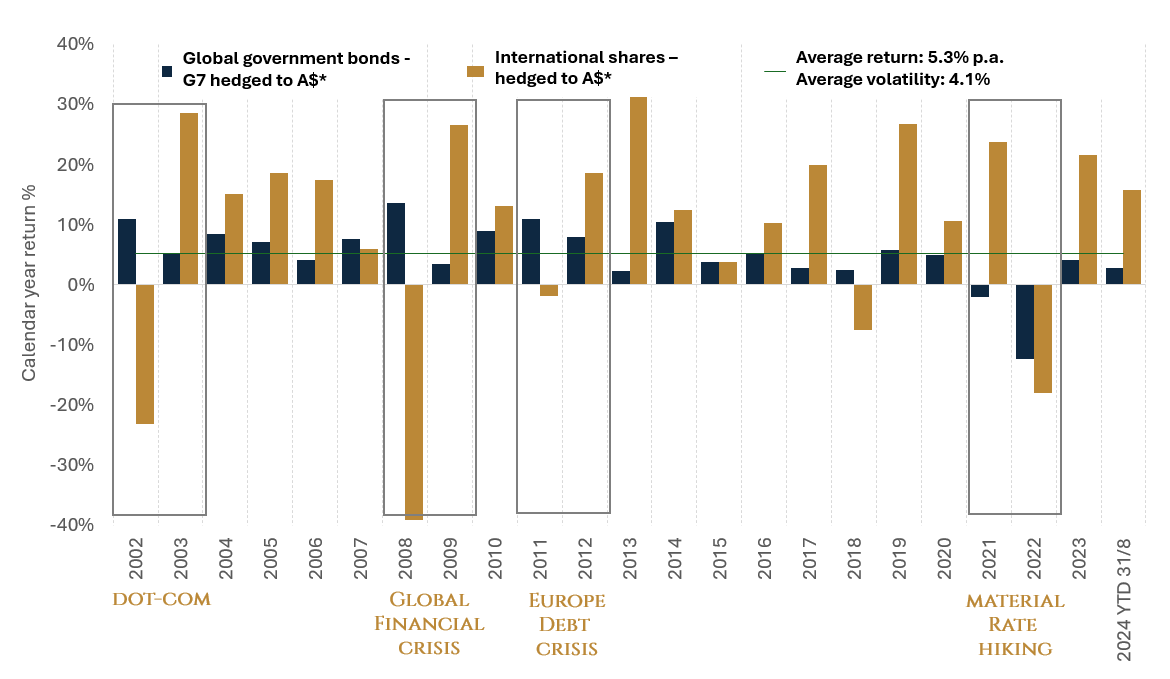
Chart 2: Global Government Bonds Have Outperformed International Equities During Major Sell-Offs
Global government bonds are among the safest investments in an investor’s portfolio, offering capital preservation and helping to reduce equity volatility due to their long-term negative correlation with stocks. They also provide stability to portfolios, especially during market downturns.
We can observe how global sovereign bonds perform during periods of financial market crises and significant events in the chart below. During the dot-com crash, the global financial crisis and European debt crisis, global government bonds outperformed equities providing capital preservation and a hedge against the equity market collapse. During the COVID-19 pandemic, global sovereign bonds and equities once again exhibited contrasting performances, although the dynamics were more complex than during previous crises. The pandemic caused a sharp, short-term market shock in early 2020, followed by an unprecedented recovery, largely driven by aggressive fiscal and monetary stimulus.
Source: JCB team analysis based on data from Bloomberg. *CC JCB Global Bond Fund hedged to A$ (class A). Intl Shares are MSCI world ex Aus hedged to A$TR index.
How should investors position fixed income portfolios as global rate cuts begin?
When considering the long-term value of fixed income, high grade bonds stand out as one of the safest investments in an investor's portfolio. Not only do they preserve capital but also help reduce equity volatility due to their long-term negative correlation with stocks, ultimately stabilising portfolios during tough market conditions.
We believe that now could be an ideal time to lock in elevated income levels and broaden fixed income portfolios to include a variety of global bonds.
The onset of the cutting cycle is likely to lead to a decrease in bank deposit rates, making government bonds a more attractive option for investors seeking capital appreciation. As a significant amount of dollars currently parked in money market funds is expected to flow into the government bond sector, this shift is further supported by the frothy nature of the private credit market, which has more than doubled in size since 2019. Interest rate cuts mean private credit’s floating rate is less attractive, redirecting capital away from it into higher interest bearing assets. The transparency and liquidity of government bond funds provide a compelling argument for this reallocation.
Adapting to market changes: why global sovereign bonds matter now
Falling interest rates signal a shifting investment landscape, presenting new opportunities for asset allocators. Rate cutting cycles underscore the importance of diversification, especially as economic conditions can change rapidly.
While timing the market is difficult, now may be an ideal opportunity to consider adding global sovereign bonds to a diversified portfolio. The CC JCB Global Bond Fund provides a compelling fixed income solution, offering access to high grade global securities with exposure primarily to developed countries, fully hedged to the Australian dollar. With decades of experience navigating various economic cycles—expansion, contraction, recession and recovery—our active management approach focuses on identifying opportunities across G7 markets, aiming to capture alpha while minimising drawdowns.
This information is for professional and wholesale investors only and has been prepared by JamiesonCooteBonds Pty Ltd ACN 165 890 282 AFSL 459018 (‘JCB’). Channel Investment Management Limited ACN 163 234 240 AFSL 439007 (‘CIML’) is the Responsible Entity and issuer of units for the CC JCB Active Bond Fund ARSN 610 435 302, CC JCB Global Bond Fund ARSN 631 235 553 and the CC JCB Dynamic Alpha Fund ARSN 637 628 918 (collectively ‘the Funds’). Channel Capital Pty Ltd ACN 162 591 568 AR No. 001274413 (‘Channel’) provides investment infrastructure and distribution services for JCB and is the holding company of CIML.
This information is supplied on the following conditions which are expressly accepted and agreed to by each interested party (‘Recipient’). This information contains general financial product advice only and has been prepared without taking into account the objectives, financial situation or needs of any particular person. It is intended solely for wholesale clients (including sophisticated investors) as defined under sections 761G and 761GA of the Corporations Act 2001 (Cth). JCB is not licensed in Australia to provide financial product advice or other financial services to retail investors.
The information provided should not be considered personal advice, a recommendation, or an offer to invest in the Funds. Recipients should not rely on this information in making investment decisions. A Recipient should, before making any investment decisions, consider the appropriateness of the information, and seek professional advice.
Neither JCB, Channel, CIML or their representatives and respective employees or officers (collectively, ‘the Beneficiaries’) make any representation or warranty, express or implied, as to accuracy, reliability or completeness of this information or subsequently provided to the Recipient or its advisers by any of the Beneficiaries, including, without limitation, any historical financial information, the estimates and projections and any other financial information derived there from, and nothing contained in this information is, or shall be relied upon, as a promise or representation, whether as to the past or the future. All investments contain risk. Past performance is not a reliable indicator of future performance.
For further information and before investing, please read the Product Disclosure Statement and Target Market Determination which is available from www.channelcapital.com.au
Thank you for sharing your feedback.
Oops! Something went wrong while submitting the form.
Perspective, not prediction.
Timely views from the investment team on policy, market structure and portfolio construction.